Laurel Fleury is a twenty-seven-year-old Fire Poi performance artist in Louisville, Kentucky. Fire Poi is a traditional form of juggling involving Kevlar balls that are connected to a chain, dipped into lamp oil or gasoline and set on fire. Laurel performs mostly at art happenings, birthdays and special events. Each performance last between three to five minutes and is accompanied by a song of her choice. Although it is typical for fire artists to dance to hard-core music or soft Celtic music, Laurel prefers Arabic, African or Latino music. She admits to also having a weakness for Joan Jett. Laurel's boyfriend Pete, who recently had his second open-heart surgery, is also a Fire Poi artist. They often spend time together practicing their performances in the park. A fire extinguisher is always at hand.
Laurel was immediately attracted to the craft of Fire Poi after watching a performance at a gallery hop in North Carolina a few years ago. “It was like the moment that you light a match. That’s how I felt. That little match inside of me lit up.” Laurel wanted that feeling everyday, so she moved to Chapel Hill, North Carolina and began to surround herself with fire artists. At first she became their safety person, which allowed her to watch and study different fire art techniques. As soon as she felt comfortable, Laurel lit up and began to practice Fire Poi on her own.
Fire has been a part of Laurel's life since she was a child. Raised by hippies, she spent the first three years of her life living in a tent in South Carolina, while her father, a carpenter, built the family home. She remembers sitting around the campfire, as her mother, also an artist, skinned and cooked the food her father had hunted in the woods. After her father finished one room of their house, they moved in and used a small camping stove in which to cook. When Laurel was four, she walked too close to the stove and her polyester nightgown lit on fire, badly burning her thigh. Although the incident caused a permanent scar, Laurel never became afraid of fire.
Pete says that Fire Poi fits Laurel's personality because she is extremely unique and different from everyone else. Laurel, like the fire, does not want to be controlled. “The flame and I have something in common. We like to just live, wiggle and breath and when we're done, we're done”, she explains. Laurel also practices telekinesis, the movement of fire with the mind. “I try to make the flames get bigger or to move a certain way, “ she explains. Because she performs Fire Poi in the dark, Laurel has to rely on her sense of balance while performing. She tries to relax, concentrate and let the music guide her movement.
Aside from performing and teaching Fire Poi, Laurel supplements her income by teaching art, designing websites, and selling her paintings, jewelry, clothing and photography. Laurel's parents, who are now divorced, have changed a considerable amount since the days of her youth. They worry and flat out disdain that Laurel is attempting to be a full-time artist. Her father, who used to fish with a bamboo stick and string in canoe, is now remarried and owns an expensive boat with fancy fishing rods. “He is just totally different, and keeps telling me that I should get a government job, because then I would be completely financially secure. And I am like, who are you dad?” says Laurel. Her mother, who used to run around in a swimming suit covered in dirt, is now what Laurel considers, "high maintenance". She gets her nails done every week, is a bit obsessive about anti-aging creams, and perhaps jokingly or not, says she wants to find a rich man that will support her in old age.
Once Laurel’s father watched her perform Fire Poi. Although he found it interesting, he does not believe that she can, nor should try, to make it her career. Laurel, on the other hand, is willing to be poor and go through rough times in order to pursue her true passion, -- art. As an artist of this nature she states, " You have to be able to work even harder than you would if you worked for someone else. You have to push and promote yourself, because no one else will".
To view more of Laurel's art visit her website at http://www.laurelfleury.com/
(Sorry the Video is Sideways Folks! Still working on that one......)
In 2003, Carl left South Dakota on a bicycle with all of his possessions packed in a small, attached wagon. Today he continues to travel on his bike throughout the United States, working mostly as a drywall finisher and painter, when he can find it. Carl has no telephone, mailing address, nor does he ever stay in one place for too long. The only way to find him is if you happen to run across him on the side of any given American road. Today, Carl is on his way to Bardstown, Kentucky to visit his only child, a 19-year-old son.
For years, Carl hitchhiked to get around, but as the late 1980's and 90's approached, hitchhiking became almost impossible to do. "I used to think people were scared, but now I think it's that they just don't care," says Carl. "They probably look at me on the side of the road, with my thumb sticking out, and think that I am a bum. They don't realize that I am just trying to get from one place to the next, just like everyone else." In 2001, Carl hitchhiked for the last time, as it took him over six months to get from Arizona to South Dakota. Given that the same trip in the late 1970's would have taken only three or four weeks, Carl decided that he needed an alternative means of transportation. With rising gas costs and global warming looming, he chose a bicycle. In a way, Carl says that riding a bike is his way of telling the government, "Hey, I don't need your oil".
Throughout his life, Carl has lived as a vagabond. He was born in Walla, Walla Washington and moved to Texas when he was fourteen with his mother, stepfather, two younger brothers and sister. Not long after the move, his mother abandoned the family, leaving the children behind with their stepfather. Carl can only speculate why she left, "Maybe it was because of the crap I was getting into, skipping school, not caring, and the way that my step dad was treating her". A year later his mother died and his stepfather, wanting nothing to do with the children, placed the entire family into foster care. Being that Carl was fifteen, he felt old enough to take control of his own destiny. So he did the proverbial, run away and joined the carnival. "I was the smart one and was like, 'I am not going to live somewhere where somebody cares nothing more for me than the food stamps and extra checks,'" he explains. At first, Carl was the gopher for carnival workers; running errands, grabbing tools, etc. Eventually as he got older, he began operating his own booth. The carnival lifestyle was conducive to Carl's disposition, and he enjoyed constantly traveling while meeting new and interesting people. It allowed him to finally start living life the way he thought it should be lived.
As Carl entered his twenties, he truly believed that he was taking a stand with his unique lifestyle. "I thought, hey, I am a free person, I can do what I want, when I want, as long as I am not hurting anyone else, as America was supposed to be," he exclaimed. But the day he turned thirty, Carl's attitude suddenly changed. He started believing that no matter what he did with his life, somebody else was always going to have a different opinion of him, and then someone else would have different opinion from that one as well. And because of this pattern, he started to feel that all people could only do what they wanted to do, within the boundaries of what society and the government wants us to do. He felt persecuted for his freedom.
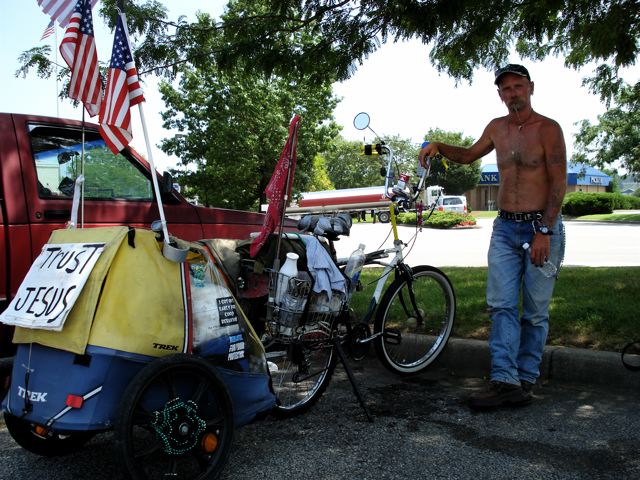
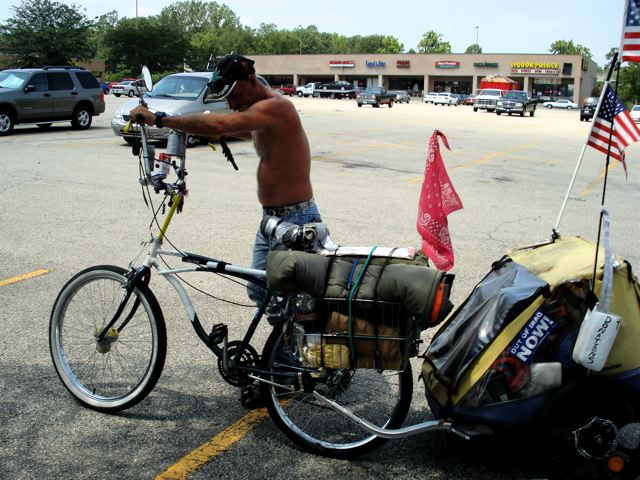
Today, in general, most people look at Carl, who is now forty-four, as if he were a homeless bum. But to Carl, his bike is home. He decorates it the same way that a person would decorate their house. His most important possessions, which are his CD's, clothes, blankets, a sleeping bag, tent, radio, and fishing pole are carefully stowed away in the wagon. While his bicycle baskets act as a garage, - holding tools, ropes and various other hardware devices. On the back of his wagon hangs a large hand-painted sign that reads, "Trust Jesus", in addition to the three American flags he rescued from the ground that now fly from a tall pole. His elongated handlebars are covered with sentimental jewelry, key chains, and knickknacks that people have given him along the way. He even has a blue bicycle horn. The bike keeps Carl in good shape; his legs are strong, as well as his hands.
Carl says that he is like most people and is just looking for a way to get from one day to the next. "I'm not out to get rich because when you die, you can't take it with you. There is no sense in it." Carl thinks that some folks would consider him an extremely strong person for the way he lives, but others would call him lazy because he doesn't hold down a job very long, own a car, or live in a big house. The truth is that Carl is a 'live-for-the-moment' type person. When he sees something he wants to do, he simply does it. "I have been to the Grand Canyon, Niagara Falls, to the Smokey Mountains and all three oceans, and have seen a lot of things in this country that a lot of Americans have never seen. " With limited funds, Carl has come to realize that in order to get from one place to the next, nobody is going to help him, unless he does it himself.
Carl admits that he often gets sad. "I am a people person and sometimes when I get around people, they shun me, turn their nose up at me because of the way I look or live my life, and it hurts my feelings." He doesn't understand why people cannot just get along and accept the differences in each other. "Just because I have a funny beard, no hair, tattoos, and painted finger nails doesn't' mean that I am any different from you. We all come from the same place, Mother Earth," he adds. He knows people all over the United States too. And though he wouldn't exactly call them his best friends due to the infrequency of his seeing them, when he does come into town, most are more than willing to help him out, knowing he won't be staying long. Carl sees himself as a very kind and generous person who enjoys giving. "I have been without and therefore have a lot of compassion for people," he affirms. After Hurricane Katrina last year, he even traveled down to Louisiana on his bike to aid in the rebuilding.
Oftentimes, Carl encounters young people who are impressed and want to mimic his lifestyle. But he is quick to tell them, "No, you don't want to live like me. Stay in school. Get a strong education. That way when you want to say, 'the hell with society, I'm living my life the way I want too', you'll have something to fall on when you get into a situation where you just can't do no more." Carl, who has little formal education, says that education is an essential resource in today's society. He believes that kids need to get smart before they get adventurous. "Living out here, like I do, it's hard, people don't care about you." He often can't even afford to eat and has learned to eat like the Indians did, hunting and gathering his own food, amidst a modern day landscape.
Carl doesn't believe himself wise, because, as he would postulate, a man who calls himself wise is actually a fool. But like most people, he admits he has his own opinions about the way we should live life, and how our government has gone wrong. On the average though, he typically just keeps his thoughts to himself, as he feels that no one really cares to listen.
One of Carl's favorite key chains is engraved with his favorite acronym, WWJD, or "What Would Jesus Do." Carl often thinks about that; what would Jesus think or say if he saw him riding down the road on his bicycle next to all these Americans driving SUV's, starring at him like he is insane? He thinks that Jesus would polish his outlook and give him a different way of reacting to the situation, and turn the other cheek when those people scold or look down on him. After all, he realizes most people just don't know any better, and that people are conditioned based on the way they are raised.
After talking, Carl began to realize that just maybe he was still that free-spirited twenty-year-old, taking a stand, living freely and giving the average American something to think about. He'd like to think so, anyway.
WHAT DOES CARL THINK?
Riding his bike around the country has given Carl the opportunity to observe our land closely. He believes that as intelligent inhabitants of this earth, we should be able to do something more about protecting it. "We were created from Earth and when we die, we go back to it. And when I die I don't want to be buried in a big pile of garbage somewhere. I want to be made into dust, not cockroach food, mixed with the garbage of humanity." Carl sees more and more constructions of highways, clustered cookie-cutter homes, landfills and deforestation. "The way humanity is treating this world is like cancer. It chips away at the a spot, until there's nothing in it, and then spreads to another place." He's not amused by the idea that only a handful of people own the majority of the land in this country. When he finds a nice place to set up a tent, or a pear tree to pick from, the owner of that land usually comes out and yells at him, or calls the police. "God gave us this earth to live on, and to coexist with, not to own it," explains Carl.
Carl has looked deeply at the state of our country and sees that Americans desperately need help. He gets frustrated when he reads about people like Angelina Jolie helping children in other countries, because he sees the same atrocities happening here. Carl has met tons of people who are homeless, and who grew up that way, never really knowing what it was to have a home. "They go to school and when they come home they go to a shelter. And they live their life in that shelter, because the economy is so bad that each parent has to work two or three jobs just to make enough money for the gas and electricity." Plainly, Carl does not think that America is as great as it once was.
Carl believes that this country could use a new barter system. For example, if you cut my trees, then I will do your electrical work. Americans have become so reliant on the green dollar that money has almost replaced God. He would like to see people learn how to quit hating; for countries to demolish all guns and weapons of mass-destruction; and for people to start caring. When they see someone who is down on their luck, instead of yelling at them to get a job, help them GET a job. "Even though I have a lot of animosity towards our government, the way they run things and the way people treat this land, it is a great land," he says. But in order for it to remain great, he concedes we must take a stand and start caring.
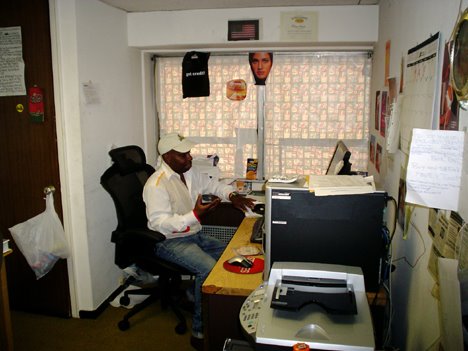
In 1958, Alonzo was born on Roosevelt Island, a narrow two-mile long island situated between Manhattan and Queens. Shortly, thereafter, he moved with his family to Harlem where they found residence in New York City subsidized housing. At the time Harlem was predominately African American and Puerto Rican. The only white people Alonzo encountered were his teachers at school, who failed to teach him about the civil rights movement, racism, slavery or anything related to the dark history between whites and blacks in America. People just didn't talk about race. “There was a running joke in Harlem that said, don’t talk about the white man in Harlem because you let him in the house through TV everyday”, he explains.
When Alonzo was fifteen, his father found a higher paying job and the family was required to move to a different housing unit in the Bronx called Marble Hill, which had a large population of white residents from various European backgrounds. At first, Alonzo naturally gravitated to the black teenagers in his new neighborhood, but soon met his first white friend, Irwin, a Jew. “I had no idea that Irwin was Jewish, but then I noticed that he was hanging out with all these white teenagers, so I shifted away from my black group of friends towards his friends who I found very interesting and different.” The white teenagers loved Alonzo, especially his wild personality and most treated him like he was famous. He was the only black person in their group, and Alonzo found the extra attention they gave him flattering.
After one year of living in the Bronx, Alonzo faced the harsh reality of becoming an adult. At the age of sixteen he had never known the real meaning behind the "N" word. His parents had always tried to protect him from racism and socially the word was not mentioned. "As a child it was not like it is today. People where not saying “Yo nigga' this and that”, explains Alonzo. Television shows at that time were highly censored too, and it never occurred to him that there were so few African Americans on the air. “Occasionally on Ed Sullivan, Smokey Robinson or someone black would be on and I can remember thinking it was really special, but I did not understand why at the time”, says Alonzo.
Then one summer day while Alonzo was hanging out with a group of white teenage girls in Marble Hill, listening to funk on the radio, and teaching them dance moves, a pale, blond-haired, blue-eyed boy nicknamed Pee-wee walked up to him and said, “No, we’re not going to put that 'nigger' music on”. “Pee-wee was a real asshole”, says Alonzo, “and it never dawned on me that I was the Negro kid showing these white teenagers, who were demanding my attention, Negro moves. But I guess if you were on the outside looking in, that’s what was going on there.” When Pee Wee uttered the expletive that day, the meaning and power of the word suddenly hit Alonzo like a ton of bricks. “Oh I get this...this is what they have been hiding me from, and this is what that word means. It means a black person and nobody told me; my mother never told me; my father never told me.” The realization made Alonzo so distraught that he began to cry and his white girlfriends came rushing to his side, grabbing and embracing him. The girls scorned Pee Wee by shouting that he was disgusting while demanding that he leave. But it was too late, the experience had left a lasting impression, and while walking home that day Alonzo remembers looking at people differently. “ I would walk past people and began to classify them saying I am black, he’s white, and he’s Puerto Rican, because I was struck with this new awful awareness and for about two days I couldn’t shake it”, says Alonzo. In hindsight, it was one of those earth-shattering realizations Alonzo needed to deal with, but he was so surprised that no one had taught him this crucial lesson at home or in school. “I finally understood what Martin Luther King was about,” explains Alonzo. He was different. Black.
After a week of contemplating the situation, Alonzo decided to return to the park in Marble Hill where all his white friends gathered, night after night, doing drugs and consuming large amounts of alcohol. His friends, unaware of the questions going through his mind, asked him to roll a joint because they could not do it as well as he. “All of the sudden I saw these white teenagers as Martians, and said to myself 'You’re the only black one'. They didn’t know that I was head tripping”, says Alonzo. He remembers also taking the subway down to midtown Manhattan, stepping outside, and feeling awestruck by the dissimilarity of environments--as if he were on the moon--and would then promptly return to the Bronx and compare the differences. For example, the white ladies on the subway in midtown would sit cross-legged reading the New York Times, as opposed to minorities in Harlem and the Bronx reading The Daily News, consisting of mostly pictures and the winning numbers for horses and lotto.
At one point Alonzo attempted to return to hanging out with his black friends, but quickly gravitated back to his white ones who had cars, and would take him to exciting places on the weekends, such as the Hamptons. “My parents were very concerned that I was hanging out with so many white people, but there was no stopping me”, says Alonzo. Every time he ran out of the house his mother would say to him, “Alonzo!, don’t let those white boys go push you up a tree.” Alonzo says he was fortunate and had very few racially charged experiences after old Pee Wee. He was well liked among the African Americas, Caucasians and Puerto Ricans in the neighborhood, who all nicknamed him 'Knox'. “I would take it upon myself to infiltrated each group because I new exactly what I was doing. For this aspect, I really liked myself because, I was really a dynamite liaison, and was able to keep the harmony of this whole block; and I was just so popular.” At that time, Alonzo was beginning to acknowledge and take pride in being a black man, because he inevitably knew that society would always view him as a such, regardless of the peers whose company he chose.
Everything was going great for Alonzo and when he turned eighteen the beautiful, fair-skinned, blond-haired bombshell named Colleen Bray walked into his life, asked him out, and they instantly became boyfriend and girlfriend. "Colleen was Irish and the funkiest female in the neighborhood especially for her age.... and she was my baby!", says Alonzo. This was Alonzo's first experience dating a white woman and he fell in love quickly. "The racial difference was really a trip, and when we walked down the street we would get all sorts of car horns" he says. One afternoon, while walking down the street together, Colleen's mother pulled up to them unexpectedly, rolled down the window, and demanded that she get into the car. Alonzo, struck with terror, thought for sure that this would be the last time he saw his beloved Colleen. But to his surprise, Colleen stood up to her mother and said "No!", refusing to get in the car, and angrily her mother drove away. Alonzo had never quite seen a person be so powerful and resolute as Colleen. But then again, that's why he liked her...
To be continued.....
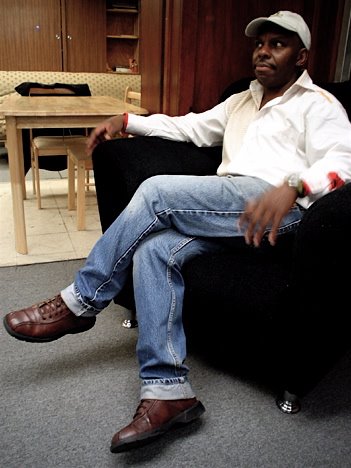
"I was born an Aquarius, therefore I am a natural brotherhood promoter and the more different you are from me the more I am probably going to like you, that’s why I am so into interracial dating” Quote by Alonzo "Knox" who has been dating white women for over thirty years.
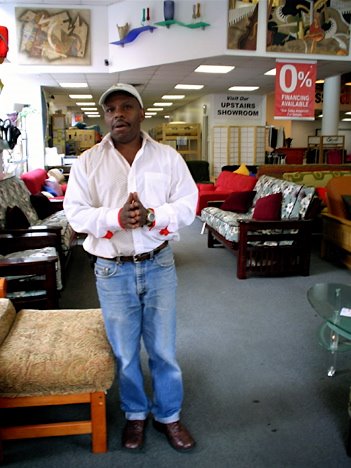
Alonzo at the Futon Warehouse in Manhattan, where he lives and works.
After meeting Colleen's mother for the first time, Alonzo planned on backing off the relationship. Colleen, however, kept calling him, and being that she was his baby, they continued to date. Every night they would hang out, drink and smoke Kool Cigarettes as they watched the sun rise. They lost their virginity to each other. "I just didn't know what I was doing; I was young, dumb and full of cum", says Alonzo.
Alonzo started spending a lot of time with Colleen's friends, who were all into getting high. They introduced him to speed; he tried it, and liked it right away. "Good thing crack wasn't around! I have never tried crack--I never will--but this speed I really liked." For three years, Alonzo continued to shoot amphetamines, which led to numerous acts of immature behavior. He did, however, manage to get a job at the United States Post Office, where he worked for nine months. "Boy, it drove me crazy! It was such a boring job, and wasn't for me. But it was a civil service job, and in the neighborhood it was like, 'Oh, you work the post office? You must be a rock star!" he explains.
Soon thereafter, he became a taxi driver and the money was good, but then both his drivers' and taxis' licenses were taken away for unpaid speeding tickets. As a result, he started stealing cars. Alonzo would go to taxi garages, especially on Saturday nights, and steal a cab from the lot. "I was a nice car crook, because if I stole a car, I would always return it." He drove it all night long, sometimes with Colleen, down to Manhattan or over to Harlem. "It was just so much fun," says Alonzo. Around 5 am, he would park the cab, maybe a half-mile from where he lived, and then call the cab company and say "Yo, a cab was taken and this is where you'll find it!" Click.
Alonzo did this for a year until finally he and Colleen got caught. Colleen's father was a New York City Detective in Manhattan. Quite naturally, with Colleen being brought up on grand theft auto charges, her father finagled a pardon, which indirectly absolved Alonzo, as if it had never happened. Alonzo had met him a month before the arrest and things were good between them. After the arrest, however, Colleens' father made it very clear for Alonzo to stay away from his daughter. He had really screwed up, but they were in love, so they snuck around him.
In October of 1981, Alonzo's older brother, whom he had not seen in thirteen years, and lived in Vancouver, sent him a one-way ticket to Seattle. He decided to go, promising Colleen that he would be back by his birthday in February. As he got off the plane in Seattle, he was greeted by a fine, white blond, who approached him and said, "Lonnie" (that's what his brother called him), "I am Susan". "I was like, 'Oh my God!,' I didn't know this about my brother, he likes Caucasian women too!" Susan directed Alonzo to his brothers' car, a black Chevrolet Monte Carlo with a diamond on the back. His brother, lighting a joint, proceeded to take him to a tavern in Seattle's Capital Hill. Alonzo was shocked when he walked in and saw there were all of these black men hanging out with all these gorgeous white women. "I was like 'Holy Toledo!' Here I was coming out of the Bronx, thinking I was the only black guy with this Caucasian love. I mean, I thought I was the one who invented this damn interracial dating!," explained Alonzo. But in Seattle, this seemed to be the norm, or so it appeared. It turns out these Caucasian women were really all prostitutes. "This wasn't the drug, alley, crack-smoking, I'll-do-anything-so-I-can-get-me-another-hit-of-drugs kind; these were beautiful women! Women that could very well be in Vogue Magazine; and I am not kidding."
Alonzo's brother, along with some friends from the Air Force, were pimping white Canadian prostitutes in British Columbia. Alonzo was dumfounded that these women wanted to be with these pimps. "I mean they knew that these men had more than one woman!," he says. Looking back he assumes they where attracted to the "pimp character". "I have met some monster pimps, who were making money and doing it right. These women would come up to the pimp and say, "Hey I want to be with you". These more successful pimps had luxurious apartments and lifestyles in Vancouver, with maybe a second house somewhere else. Their girls only worked at night. "It was just like the movies," Alonzo says. "The women would sit around the pimps' house, painting their finger and toenails, getting ready to go out at night to pick up tricks".
Alonzo witnessed this all firsthand but had no aspirations for becoming a pimp himself. Instead, his role was official "baby-sitter". Susan, his brother's girlfriend, had two small children. "I loved those little kids and they called me Uncle Lonnie.... I miss them even today," he says. On Monday nights Alonzo's brother would have his buddies over to play Penuckle, as they snorted cocaine, smoked weed and drank Johnny Walker Black. "Once they got a little intoxicated, they would start talking a lot of shit about their women. I felt really dumb, listening to these guys -- I mean, I didn't even know how to spell 'fuck'!" Alonzo and his brother, who wanted him to stay home and baby-sit on the weekends, began to argue and disagree on issues related to his role as sitter. "I was like, 'Yo! I have been here all week baby-sitting, and I am getting out of here, because I got to go dance; get women!" Sometimes, his brother would bring him along to go "catching", which means 'to pick up'. On Friday and Saturday nights, Alonzo would get all dressed up—his brother never let him leave the house unless he looked sharp--and he would learn how to pick up women. "I was clean, from New York City, and you couldn't tell me anything! Because I could dance and dance well -- always have. I was raised on James Brown...!"
Alonzo began dating various white women in the scene, if you will, but he still loved Colleen, even though they had only spoken on the phone from time to time. He had suggested she come out west, but it never did materialize. It was not until 1989, though, when Alonzo came back to visit New York, that he saw Colleen again. She was with a white guy at the time, who was a 'joke,' apparently. "This guy would go all the way to Harlem to get his dope and then come back the Bronx. I was like, Oh my God, Alonzo, what did you expect, you have been away for years, and she wasn't going to wait for you, but anybody but this guy!," he lamented.
One of the last times Alonzo saw Colleen, she had been supposedly going 'down hill'. Her boyfriend had been beating her, and Alonzo tried calming her by saying, "Colleen, sweetheart, baby, I got to go back to Seattle, and then I will come back for you. You're my baby." Unfortunately, at that moment her boyfriend, who had been buying cigarettes, came out of the corner store. Alonzo felt completely powerless to do anything. A year or so later Colleen died. Alonzo heard a couple stories; that she had caught the "monster'--what they called 'AIDS' back then--or that her liver went out due to excessive drinking. "I don't know if I kind of messed her up or not? I don't know if the interracial dating got to be too much for her, especially since I left? I kind of will never know until I die. She came to me and I went to her and I thank God right now for the experience."
Eventually, Alonzo left British Columbia. Susan, suddenly finding herself unhappy with the idea of being involved in the sex business, packed up the kids and left. Alonzo and his brother made haste back to the border for Seattle just before the whole prostitution ring was uncovered. Alonzo himself, feeling lost, decided to stay in Seattle. While there, he earned his high school diploma and started working in the telemarketing department at Sears and Roebuck, while simultaneously getting involved with one woman to another. Not going anywhere, he eventually moved back home to New York.
Today, Alonzo, who has never been married, lives in Manhattan above the Futon Warehouse, where he also works and manages. Alonzo says that white women have been his biggest motivation in life and the reason he desires success. He recently started a Judgment Recovery business that he hopes will finally bring him the money and the connections he needs. "I went around the back way instead of going the front way, but I am qualified and it's on", he says. He is very proud of the fact that he has been dating interracially for years, long before it was socially accepted. "I learned this interracial dating thing on my own and no one is more qualified to talk about it, well maybe Richard Pryor, than me," he believes. When he was five years old his mother would sit him in front of the TV, while she cooked dinner for his father, and everyday around five-thirty, the cartoon 'Popeye, The Sailor Man' would come on. He loved Popeye, his muscles and how he was always protecting his girlfriend, Olive Oyl, from Pluto. It has only been the last eight years that he finally put it all together. He thought to himself, "How come you are so fascinated with these long-legged Caucasian women? Where is this coming from?" And then it dawned on him. "'You fool, you got programmed at five years old!' I swear to God, I really know that to be the truth," he reasons.
Alonzo often refers to himself as Alonzoman, which comes from a combination of Superman, Zorro, the Green Hornet, the Lone Ranger and especially Popeye. His motto is, "I'm Alonzoman and I am always doing the best I can, sometimes I do better, because I have always wanted to make the impossible, possible." With Alonzo, anything is possible.
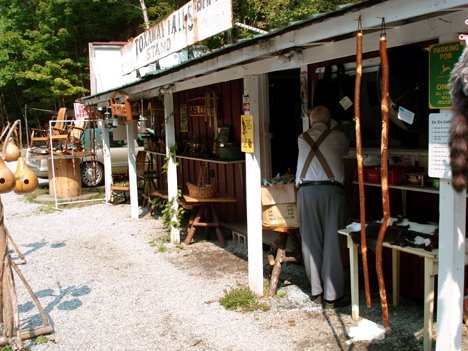
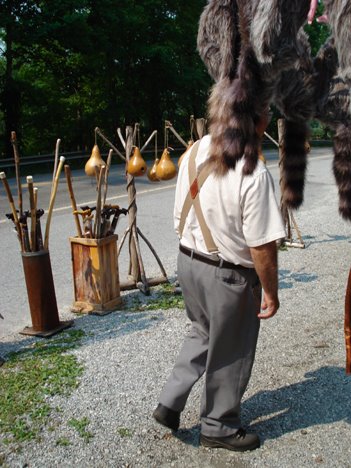
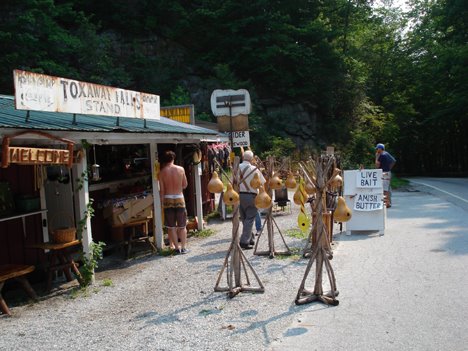
Seventy-seven year old Jack Owen sells boiled peanuts, cold drinks, live fishing bait, raccoon tail hats, rustic furniture, hand-made gourd birdhouses, walking sticks and old-fashioned toys among other things at the Toxaway Falls Stand, a small roadside shack in the mountains of Lake Toxaway, North Carolina. Lake Toxaway was the first artificial lake to be built in the Appalachian Mountains in 1902. Jack's father Victor, who was partially blind and could not work a conventional job, built the stand next to the falls in 1947 as a way of supporting himself. "Back then in this area there wasn't much going on and my daddy placed a stand on the other side of the bridge over the falls selling birdhouse, drinks and not much of nothing to tell you the truth," explains Jack. In the 1960's a real estate development team arrived in Toxaway, set up a sales office and moved his fathers stand using a logging truck down the street to its current location along U.S 64. Over the years the stand has become a reoccurring stop for visitors who when asked can remember exactly what they bought the first time when they came as a kid.
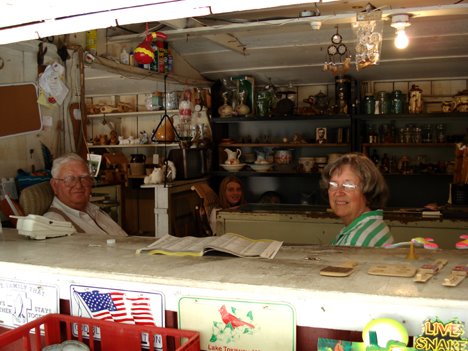
Jack took over the family business when his father passed away twelve years ago. "I enjoy doing it- I am too old to do anything, but I still enjoy it, it gives me a chance to shoot a lot of bull," Jack says. People often stop by just to talk and he is always willing to tell anybody what they want to hear. Today his daughter and granddaughter are helping him work. His wife, who is into real estate, also stops by most mornings to help set up. They live four miles away from the stand. The Owen family was among the first pioneers to reach North Carolina, or what was then the Hogback Valley, in the 1800’s. Attempting to pull my leg, his daughter nodding her head, Jack tells me, "See this mountain behind me, I remember when that thing wasn't bigger than a potato."
Nowadays Jack tells me that it is hard to say what his favorite thing is about North Carolina because it's become too expensive to live there. Taxes and real estate prices have exceedingly increased as outsiders have come in and built huge summer homes. "If you want to buy something you can't find it or afford it," Jack explains. He considers himself lucky because the stand has no overhead and he can afford to sell his merchandise cheaper than anybody in town. Most of the items he sells come from local artisans and farmers. He also purchases his furniture from Amish families in Pennsylvania and sells a lot of Cyprus from Georgia. I asked Jack if he made anything in the store and he answered, "Sugar, it keeps me busy just being here." Jack says people really love his boiled peanuts and just last weekend a lady came by and bought six bags that she shipped back to California. Financially the stand does pretty well. Jack thought this year would be slow with the heat, "But you know I've done better this year than I have ever done!" The Toxaway Falls Stand is open during the spring, summer, and fall. Little has change about it's appearance. Once Jack thought about putting a little paint on it to make it look fancier, but people kept telling him not to, so he left it alone.
"I guess you would consider me an old timer, but I didn't used to be," says Jack who will turn 78 in November.
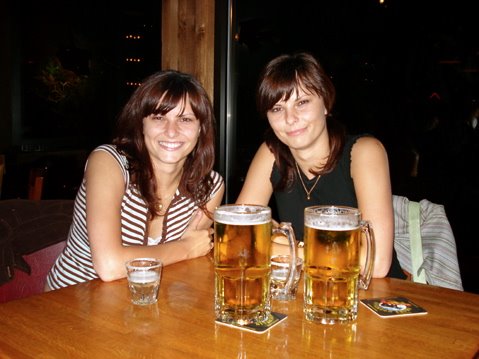
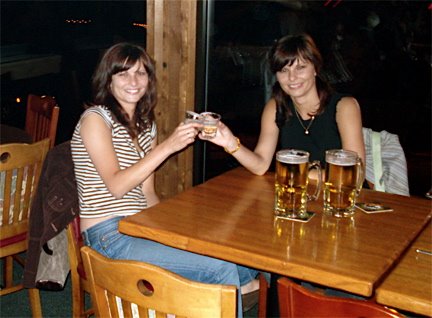
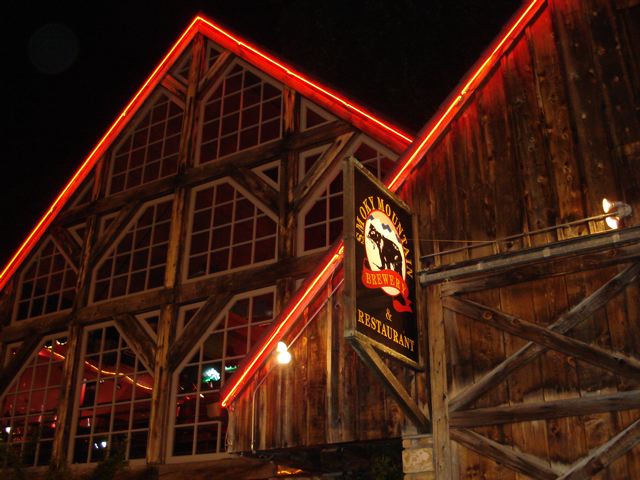
Kamila and Sylvia, 25 year-old identical twin foreign exchange students from Poland, are enjoying pint size beers together as they wait for friends at The Smokey Mountain Brewery in Gatlinburg, Tennessee. The twins, who are computer science majors, have come to Tennessee for the second summer in a row to improve their English skills. This summer they have rented a cabin in the mountains and are working as hostesses at two different restaurants, as well as serving ice cream at a soda shop. Although they work most of the time, Kamila and Sylvia love the Smokey Mountains and have many Polish and American friends. So far they have not met any cute guys, but it has only been two weeks, and perhaps jokingly, Kamila tells me they are looking for male American twins. Both agree that they find American men more friendly and handsome than Polish men, however unlike Polish men they have found that American men often cheat. They are modest when asked if they get hit on a lot, saying “Oh, no not really” as they look at each other and giggle.
As twins, people always ask Kamila and Sylvia how they differ from each other. They both have a hard time answering that question and think their friends always have better answers. Kamila does mention that she is five minutes older than Sylvia, while Sylvia adds that she is a little bit taller than Kamila. They do not always hang out together and often have different friends and hobbies. However, both really enjoy the outdoors and sports, having both played soccer in Poland for six years.
Kamila and Sylvia say that the biggest difference between Poland and Tennessee are the people and food. They have found that Tennesseans are friendlier, always smiling and saying, “Hello, how are you?” In Poland Kamila says, "The people are always poor, so they are always upset”. The twins find food in America gross, especially the bread, and they don’t understand why people eat so much fast food. “I know that it is because it is really cheap, but it’s not good for your health”, says Kamila. She says that most people in Poland would not consider eating at a fast food restaurant. She has noticed that fresh healthy foods in America are very expensive. Both consider the music in America very different then that in Poland. Techno music is huge in Poland while country music is the most popular in Tennessee. In Poland country music is non-existent, but Kamila and Sylvia have grown to like many of the country music songs they listen too in Tennessee. Although Kamila and Sylvia like spending time in America, they admit that they would much rather prefer to keep their permanent home in Poland.
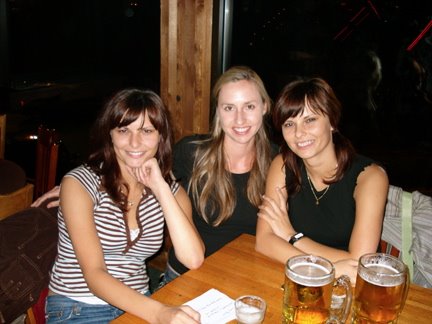
Kamila on the left and Sylvia on the right
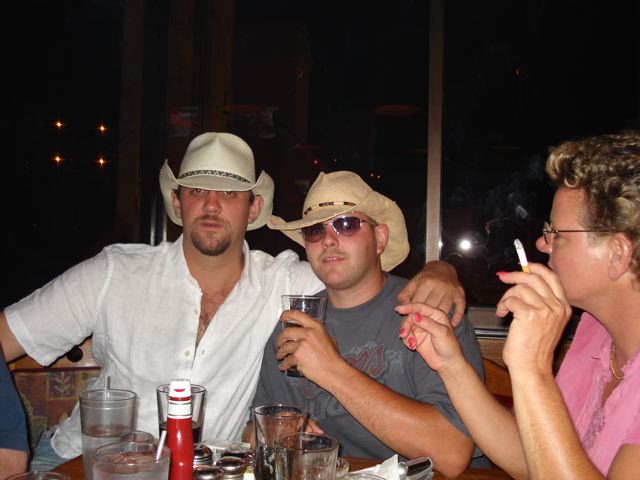
Scott and Blake would both like to meet Kamila and Sylvia
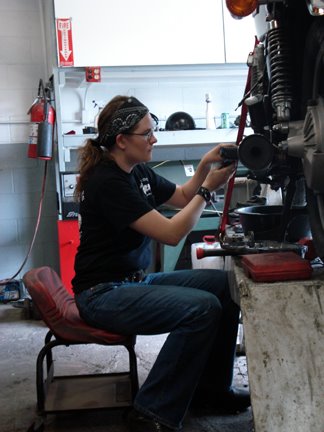
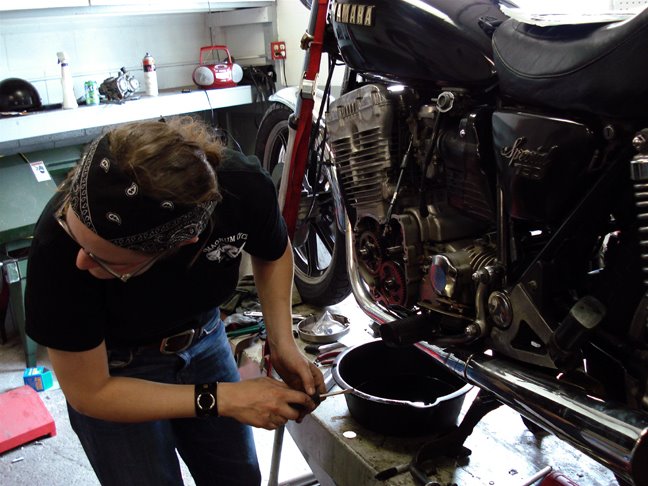
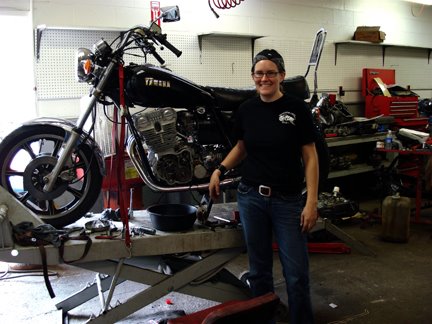
Sarah, a 27 year-old artist, photographer and motorcycle mechanic in Louisville, Kentucky, is about to leave town on a month and a half cross-country motorcycle adventure where she will meet and photograph the lives of other female mechanics. Mentally she is in preparation mode, mapping routes, deciding what cameras to bring and making sure her bike, a 1978 Yamaha, runs well. Sarah plans to make stops in Colorado, Utah, Nevada, California, Arizona, and potentially South Carolina, Ohio and Florida. Staying in hostels, hotels, on friend’s couches and occasionally camping along the way she will pack the bare essentials in a saddlebag including a few pairs of socks and underwear, a couple t-shirts, maps, a notebook, cameras and all of the tools needed to fix her bike, just in case.
Sarah has not met many women who are interested in mechanics and by taking this trip she hopes to connect with a few. With the purpose of creating a 12-month calendar she will document these women in their natural work environments. The Female Mechanics Calendar Project began a few years ago when Sarah noticed that typical shop calendars mostly depict barely clothed women spread out on a cars and motorcycles, sometimes holding a tool. Her calendar will be offered to shops as an authentic alternative to the typical 'tool-girl' calendar. Through word of mouth and the help of a grant she received through The Kentucky Foundation for Women, who published a 'call for female mechanics' in their newsletter, Sarah was able to locate other female mechanics across the country. She was also featured in a local woman's magazine and had a well-received art exhibition with photos from a preliminary 2003 cross-country trip documenting the lives of friends who had moved to other states.
Included in the list of women Sarah will soon meet are a jet plane mechanic who has worked for UPS in Reno, Nevada for thirteen years, a German mechanic and motorcycle racer in San Francisco and a student attending MMI, a mechanic school in Phoenix. While in Reno she will also connect with a mechanic named Celeste, who owns an auto shop, and together they will travel on their motorcycles to San Francisco. Sarah also plans to attend the Moto GP races in Monterey, CA.
Sarah has been riding motorcycles since she was eighteen. As a little girl she liked riding bicycles, building Lego’s and has always been a bit of tomboy. “I like to get dirty, I like fixing things and being creative.” She is a self-taught mechanic and started learning eight years ago when she bought her first bike. For the past two years she has worked part-time at Magnum Cycles, a unique motorcycle and repair shop on Dixie Highway in Louisville. Her coworkers at Magnum, who are all men, have been very supportive of her project. “The last trip I sent them postcards and then they mailed me parts when I needed them in Chicago.”
While on the open road Sarah often goes days without music, distractions or communication with others. "All I hear is wind, but that makes me appreciate music so much more when I get to listen to it." She enjoys the time by herself but really enjoys reaching a destination where she can hang out with new and old friends. Sarah, who admits to being shy, is not scared of being on the road alone saying, "You just can’t look at it like everyone is out to get you, because they’re not.” She does however have to be extremely aware of other cars and drivers. During her last trip one of her favorite places to ride was South Dakota because the roads were straight and she could zone out a little and sing songs in her head. Sarah says that it is pretty spectacular to ride through the rain and when it storms she sometimes pulls over and just sits it out. In case of an emergency she can always use her BMW Riders Anonymous Book that list contact information of bikers throughout the country willing to lend a helping hand. The hardest part of the trip is to know that she makes her mother back home very scared.
Sarah says this trip will be a great learning experience and is excited to meet other women who have found a vocation that makes them happy. She plans on publishing her calendar in 2007 and will also create a traveling art exhibition that documents her journey and lives of the women she meets.
To check learn more about Sarah and her project go to www.sarahlyon.com.
Sarah is also currently looking for places to stay along the way, so if you have a free couch add a comment below with contact information.
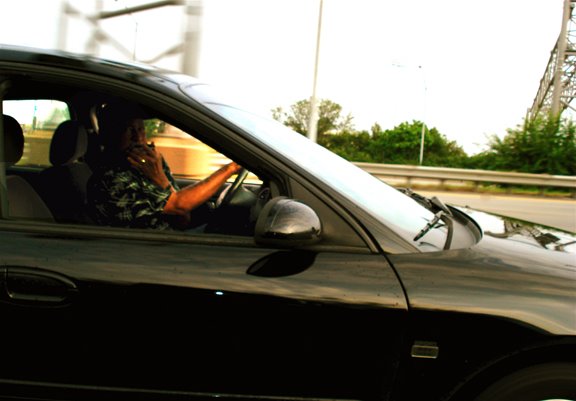
I was driving in my truck on the 1-64 this evening listening to music, windows rolled down and all the sudden I look over and see this older man playing the harmonica to me . We drive side by side for a minute or so, I smile, he smiles as we try to keep too the same speed..... wow, what a feelin'
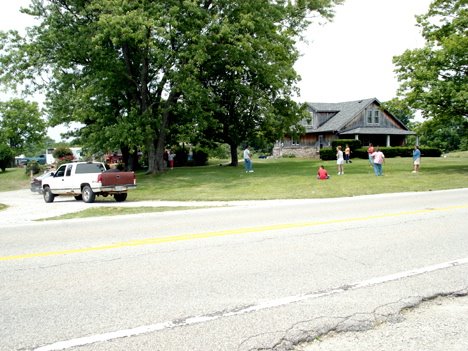
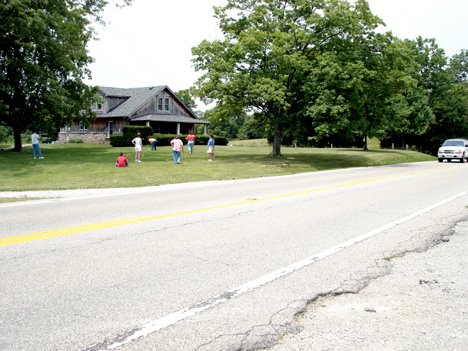
In the yard of a house located off a small highway I notice a large group of people playing croquet, throwing baseballs and having, what appeared to me to be a really great time.
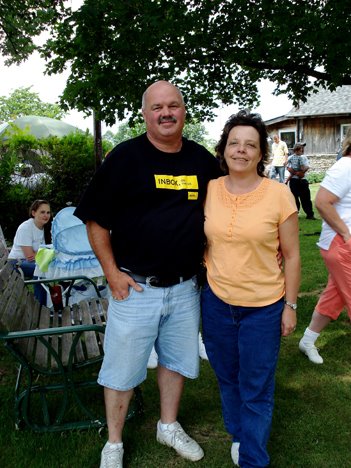
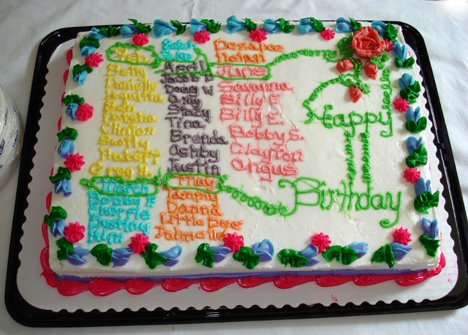
Kim Vittitow and her husband Bernie are hosting a birthday party at their home in Trimble County, Kentucky for family members born in February, March, April and May. Inside the house is a large birthday cake with over thirty-two names on it. Kim purchased the cake at Sam's Club and decorated it herself. She says it wasn’t much fun, yet smiles and laughs while showing it to me.
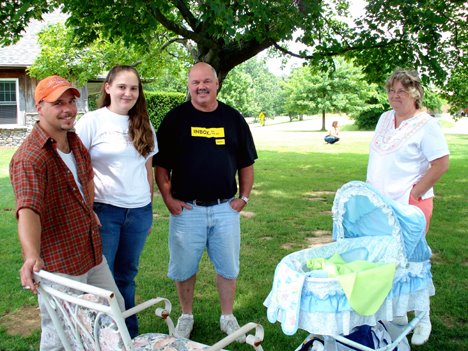
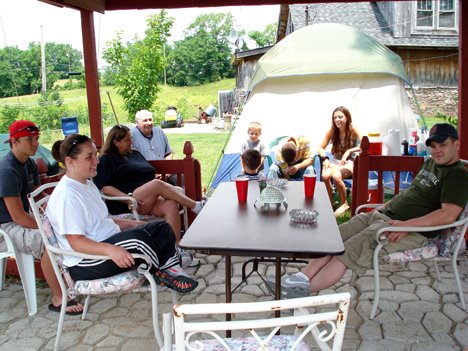
The guest are all outside playing croquet and enjoying the yard, which has an above ground pool, covered deck, and small quarry stoned pond filled with lotuses. Bernie and Kim are proud of their yard and have been working on it together little by little since 1999. They have two grown children, a daughter who is in the house getting ready for a friend's wedding and a son who is outside with his wife and newborn son. Bernie and Kim have lived in this house for ten years but raised their children mostly at her parents house in another part of the county. Kim says she loves her entire family and is expecting over fifty people to show up throughout the day. “There were six in mom’s family, three of them are here right know and three of them that are expecting. They all live in this two county area, Pendleton and Trimble." Kim says she can't help but think how lucky she is to have such a close family and today’s celebration is only her mother's side.
In addition to celebrating birthdays, today also marks the beginning of Kim's weeklong summer vacation from her job at the Trimble County Prosecutor’s Office. She is the Child Support Coordinator for the entire county. For vacation Kim is going camping with her brother and mother, a family tradition since they were kids. Now that their mother, who is sixty eight, is less mobile they stay close to home, pitching a tent in Kim's backyard. “I want her close to the house, so if she get’s hot, she can go cool off in the house”. Bernie says he won't be joining them, "I like camping, like at the Holiday Inn", he laughs.
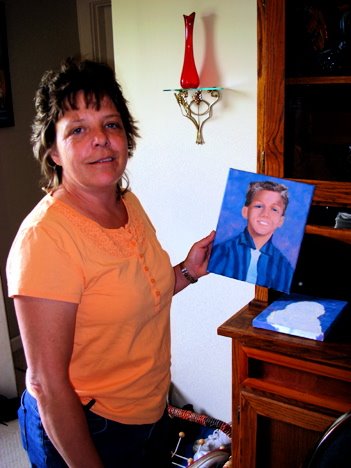
Kim has seen many changes throughout the years in Trimble and Pendleton County. When Interstate 71 was built in the late 60's and the Pendleton Drive-In shutdown the town completely died. "We had a skating ring at one time, several big restaurants, stores and it just died", Kim explains. She says however that in the past four years the area has started coming back to life, which is good for the community. In her opinion it is because property in the area has become the new and only cash crop now that the Tobacco buy out has started. "There is not enough money to pay taxes on big farms so our farmers have no choice but to sell." She says Trimble County is a very beautiful and friendly place to live and new subdivisions go up every month. Personally Kim is enjoying taking classes at new art studio that a retired schoolteacher opened down the street. She has become a natural painter and is currently working on a portrait of her son when he was a kid.
I let Kim get back to her game of croquet and we exchange emails.
The Cake
Bernie with his son, daughter-in-law, and grandson
The tent
Kim's mothers dog, who will also be camping with them this week.
Kim shows me the painting she is currently working on.